
Baltimore County City Directory Shelves
No complete run exists. Printed Baltimore County household directories survive only in fragments, split across digital volumes, historical repositories, regional libraries, and dated telephone references. Get the title right. Identify the exact title and its geographic scope, then choose the holding that preserves that volume, since county and city material can sit together without describing the same jurisdiction. Neighboring titles rarely match.
| Collection | Verified years | Where held | Access |
|---|---|---|---|
| Matchett's Baltimore Directory | 1827 | Maryland State Archives digitized volume | Online page image; city-centered scope |
| Woods' Baltimore City Directory | 1875 | Digitized Archive.org volume | Online OCR and page images; verify the page image |
| R.L. Polk & Co. Baltimore directory | 1891 | Digitized Archive.org volume | Online volume with map, street material, old and new numbers, and appendix |
| Pratt city and reverse telephone directories | Telephone runs begin in the early 1920s; other years vary | Enoch Pratt Free Library Maryland Department | Collection check in person for a given county and year |
| HSBC local directories and yearbooks | Limited county and city material; public inventory does not itemize every year | Historical Society of Baltimore County | Noncirculating collection; contact before travel |
The table lists confirmed examples only. Publication was never uninterrupted. When a directory year is missing, the Baltimore County Genealogical Society's obituary, family, cemetery, and surname files make strong companions for filling the gap. Verify each lead against the original entry, a census schedule, a deed, probate material, or a page image.
Baltimore County City Directory Repositories
Start any Baltimore County city directory search at the Historical Society of Baltimore County library, the county's own repository for printed volumes. The published inventory runs deep. More than 4,300 books sit alongside more than 10,500 photographs, roughly 2,600 vertical-file folders, and about 4,400 surname files. Cemetery inscriptions, over 1,200 maps, yearbooks, newspapers, and limited city and county directories round out the shelves. Nothing circulates, and hours are limited. Doors open Friday and Saturday from 10 a.m. to 2 p.m. Nonmembers pay $10. Mail research runs $25 per hour for nonmembers. Members pay $15 per hour.
The HSBC library holdings page lays out the directory, surname, map, obituary, cemetery, and research-service material available in the Cockeysville collection.
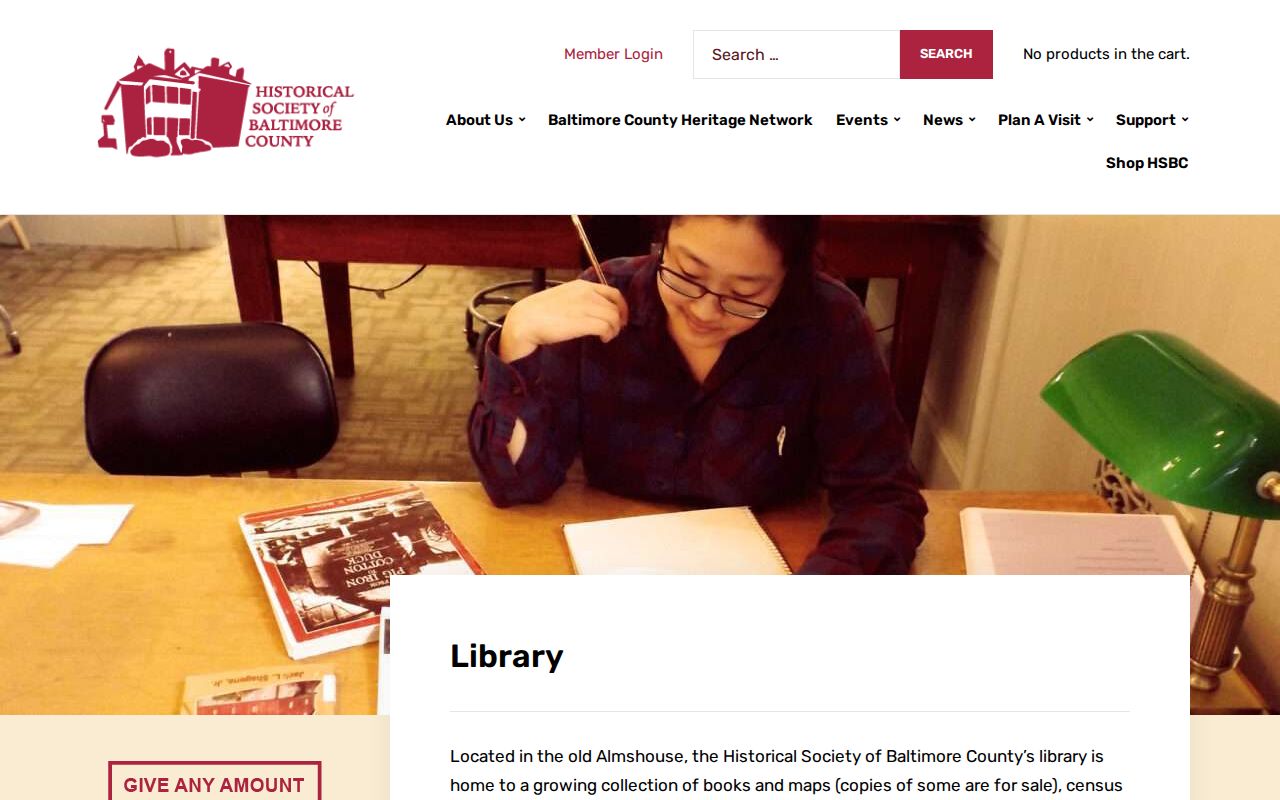
The Historical Society of Baltimore County sits at 9811 Van Buren Lane in Cockeysville. Its listed phone number is 410-666-1878. Staff there will run a surname or address search on request. When you request copies, record the title, box or file, year, page, and any copying restriction tied to the item. Those details form the citation your later lookups will rely on.
The Baltimore County Genealogical Society library is a deeper well for resident records. Its shelves hold more than 4,000 books. They include over 800 Maryland county volumes, surname files, and the Dr. Miller card file. Obituary entries exceed 10,000. The collection also adds family genealogies, marriage notices, burial material, and several census indexes. One rule shapes every visit: published copy requests stop at ten pages per trip. So choose your titles and page ranges with care before asking staff for copies.
Baltimore County City Directory Database Access
Baltimore County Public Library opens a second library route into directory material. Its genealogy databases span census, immigration, vital, military, directory, photograph, newspaper, and local-history content. Ancestry Library Edition sits among them. Access works only inside branches, not as an unrestricted remote county register. Each database carries its own access rules, so confirm them before planning a session. The BCPL database menu lists the in-branch genealogy and local-history options. It helps you locate a collection before citing any printed directory or image.
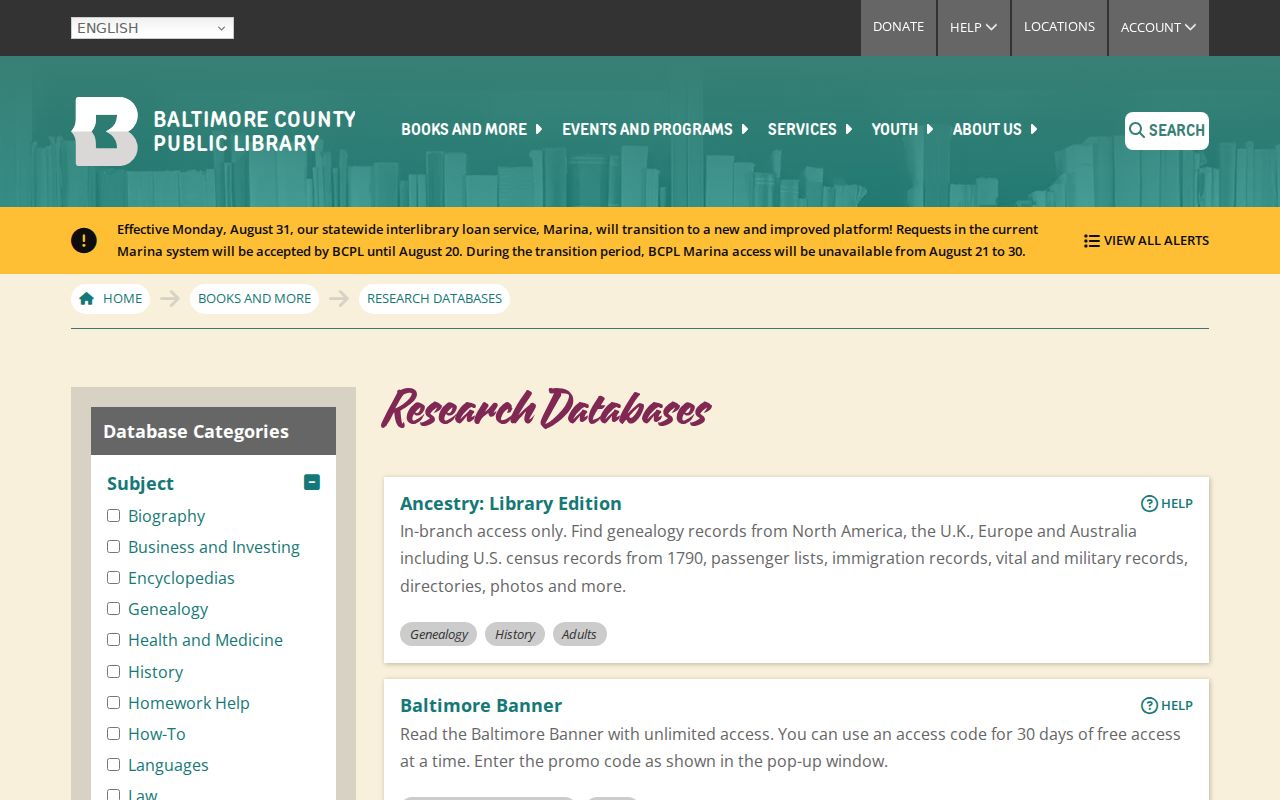
Cite what you find. Every database result should carry the database title, the record or image reference, and the library access context, because that citation shows whether the evidence came from an indexed transcription, a scanned page, or a separate historical collection.
Pratt's Maryland Department anchors regional directory research. It holds city directories and reverse telephone directories for many Maryland counties, plus maps, atlases, and roughly 24,000 photographs. Telephone directories begin in the early 1920s. The department's house-history guidance is a model of method: it shows how directories, maps, newspapers, deeds, plats, and assessment records work together to trace a property and its past residents.
Note: A database hit points to a source to inspect, so keep the collection title and the image or record reference in any citation, not just the search result.
Baltimore County City Directory Years Online
Digitized Baltimore volumes carry real regional weight, but read each title and page for the Baltimore County connection before treating an entry as county evidence. The 1827 Matchett directory, digitized by the Maryland State Archives, stays city-centered. The 1875 Woods directory pairs a resident list with address and business material, a street directory, OCR, and page images. The 1891 R.L. Polk directory adds a new map, business and street sections, old and new street numbers, and an appendix. For a historical Baltimore city directory entry, the digitized Woods volume serves both OCR and page-image access.
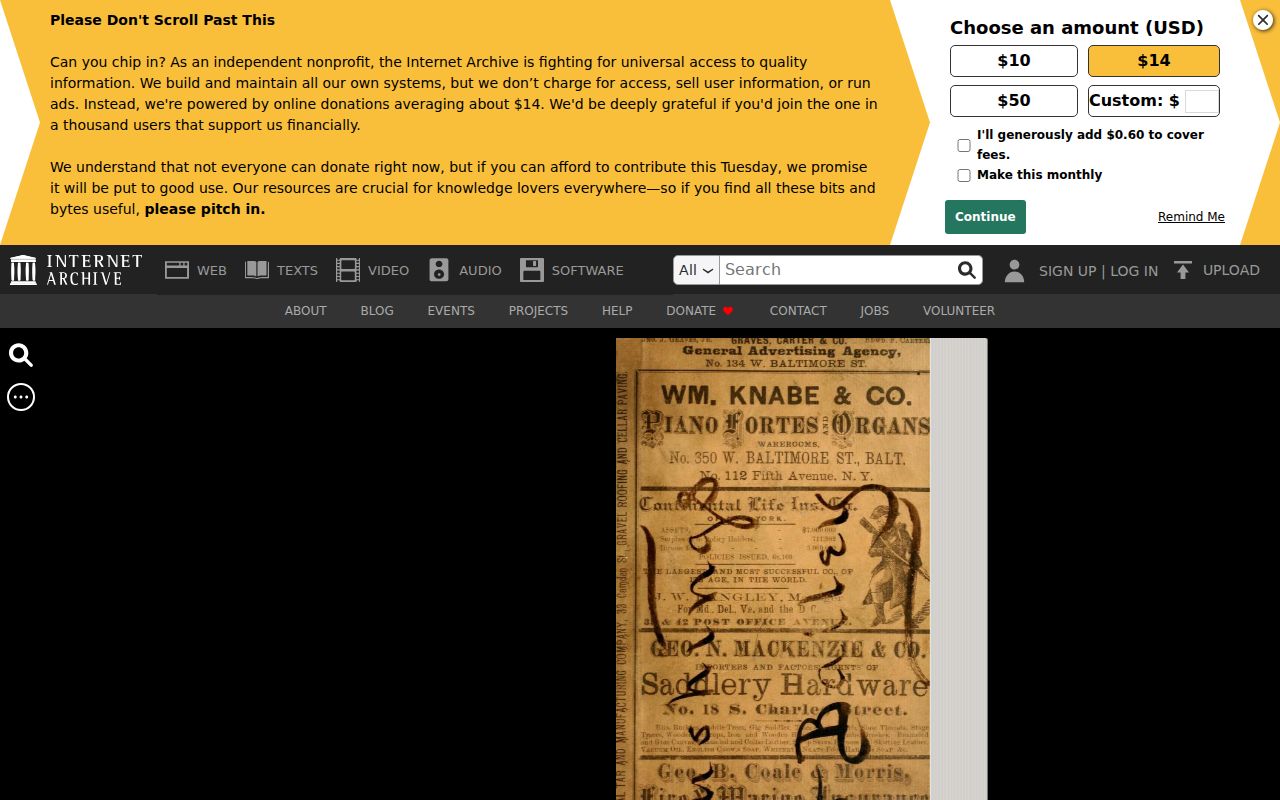
Digitized Baltimore County directories open quick doors. Still, OCR often blends columns. It may lose a street suffix or garble a surname into something unrecognizable. Before trusting any hit, open the page image and read the printed line yourself. Keep the original spelling separate from the corrected one you adopt for searching. One caution matters for county-wide work: a city-centered directory is not a complete Baltimore County roll. So label it honestly when you cite it.
Read a Baltimore County City Directory Entry
A Woods entry from 1875 packs a lot into one line. You may see the surname and given name, an honorific, an occupation or office, and a firm name. Some lines also carry a business address and a dwelling address. A boarding-house note may appear, and so may a county and company reference. The dwelling address is the detail worth chasing. Match it against a historical parcel, a map, or a census line. A deed can confirm the household too. Remember that a business line can sit on an entirely different street. And a county reference, even one hinting at a homestead, is never a parcel identifier. Nor is it a legal description of the property.
| Name line | Printed surname, given name, initials, honorific, and spelling as supplied by the publisher |
|---|---|
| Occupation or office | A dated description that can help separate same-name entries when compared with other sources |
| Firm or business address | Business or firm location, which can differ from the person's dwelling |
| Dwelling address | The residential line to compare with a map, census, deed, or later directory |
| Boarding notation | A lodging clue that is distinct from a property owner or a permanent household finding |
| County or company reference | Contextual text that needs a separate jurisdiction and address check |
- Criss-cross directory
- A directory section arranged by street or address, useful for a dated address comparison.
- Householder index
- An index that organizes entries around a household name rather than a map parcel.
- Abbreviation key
- The volume's explanation of shortened terms and marks; read it before expanding an entry.
Trust the printed page for exact wording. A Baltimore County city directory entry is not proof of ownership, continuous residence, family composition, or every person at an address.
Baltimore County City Directory Research Timeline
Directory coverage around Baltimore County arrived in scattered pieces rather than one unbroken series. That patchwork still gives researchers solid anchor points. The confirmed dates help most with families in motion. A family may appear in an early volume under one postal label and in a later parcel or census under another. Each Baltimore County directory entry deserves a note. Pair the volume's title with its stated geography, and record whether the jurisdiction was city or county.
| 1827 | Matchett's Baltimore Directory provides a digitized early example. |
|---|---|
| 1851 | Baltimore City separated from Baltimore County, creating a jurisdiction check for later records. |
| 1875 | Woods' Baltimore City Directory supplies a digitized entry, street, business, and page-image example. |
| 1891 | R.L. Polk & Co. issued a volume with street material, old and new numbers, map, and appendix. |
| Early 1920s | Pratt reports telephone-directory holdings beginning in this period. |
| Through 1950 | NARA makes federal census schedules public through 1950 under the 72-year release rule. |
These directories belong to local record keeping, not to a tidy publishing schedule. No library or archive publishes first and last complete printed years for a Baltimore County residents directory. Treat every gap that way. A missing year is a question for a librarian or archivist. It is never an assumption to fill in yourself.
Trace Families in Baltimore County City Directories
Think of each Baltimore County city directory as a dated observation. Start from a known person, a rough year, and a place. Then check the dwelling, the business, and the family context. See if they stay consistent from one directory to the next. Federal census schedules are open to the public through 1950. They can supply household detail between directory appearances. A disappearance from the residents directory can mean several things. It may signal a move, a death, or a spelling change. The person may simply not be listed. It is never a conclusion on its own.
- Find a candidate entry in a specific year and transcribe its printed name, dwelling, and any firm or occupation text.
- Check the abbreviation key and compare the dwelling with a map, parcel, deed, or city street index appropriate to that period.
- Follow the name through later and earlier directory years, testing initials, married names, aliases, and alternate spellings.
- Pair the dated entry with the relevant census year, then compare neighboring households, probate material, land records, cemetery files, and newspapers.
- For a deceased person, use an obituary as a lead and confirm it through an Orphans' Court or probate index, will, inventory, account, deed, and burial source.
When an address becomes the real question, shift to the current parcel and deed chain through the Baltimore County street directory records instead of reading a historical volume as a current location record. Old directories describe where a family once lived. They cannot confirm who holds a property today.
Note: When a historical address enters a family timeline, keep the directory title, year, page image, jurisdiction, and source date with it.
Baltimore County Directory Jurisdiction Checks
Baltimore City and Baltimore County have been separate jurisdictions since 1851. That split is the biggest caution in any Baltimore County city directory search. A nineteenth-century county resident can turn up in material later filed under Baltimore City. A modern Baltimore postal label can also sit on county land. Before joining entries across a century, record the county or city, the title, the date, postal city, street address, parcel or PAN, and source date.
The Maryland Manual's Baltimore County chronology documents the 1851 separation and the later choice of Towson as county seat. It makes a good check whenever a directory title or deed seems to use Baltimore in more than one sense. Community histories, newspapers, church records, cemetery inscriptions, and old maps can clarify a vanished place name. None of them should override the jurisdiction the source itself states.